
Nothing will ever be perfect
On beginning again

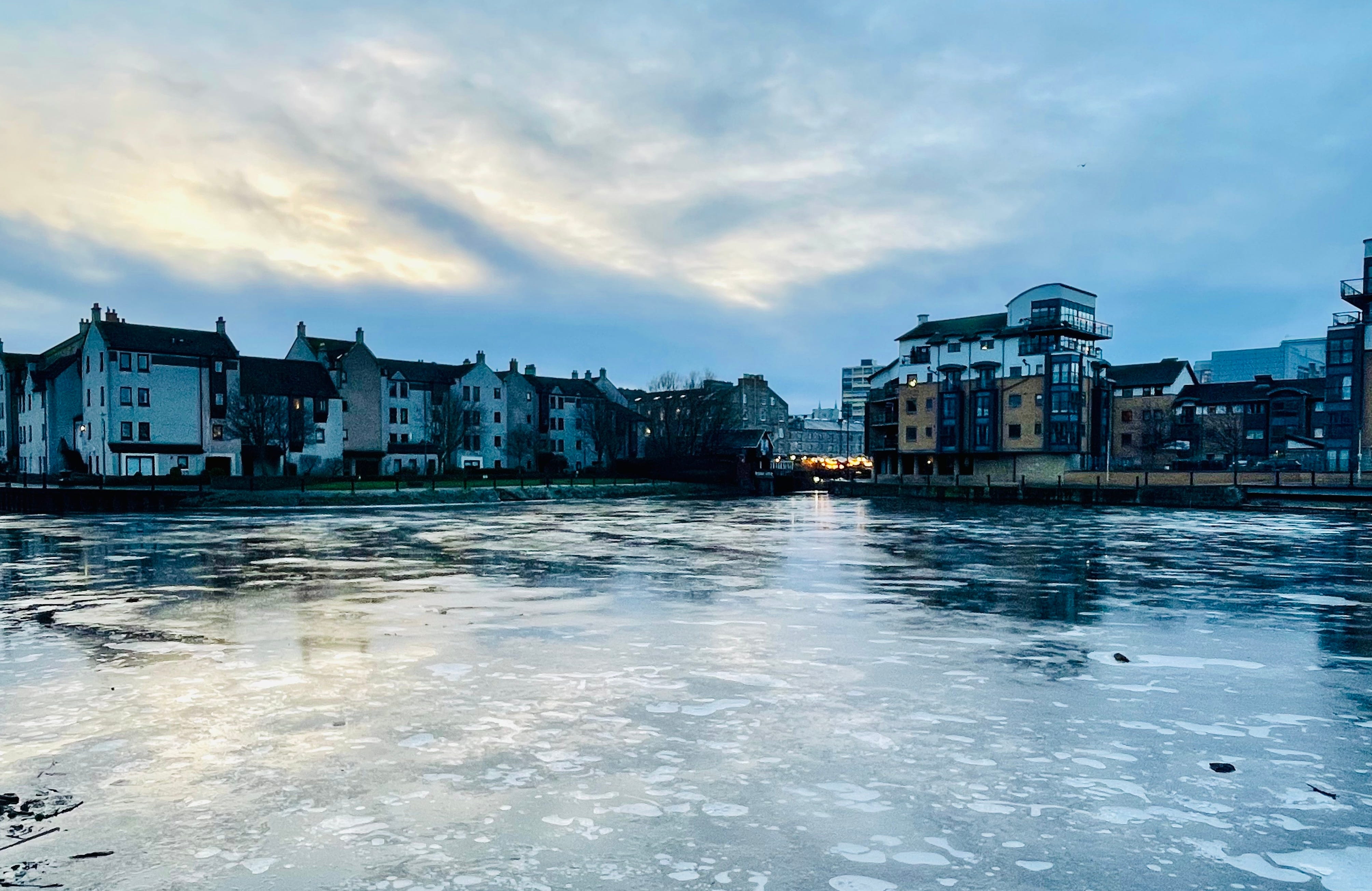
Warmest greetings to you all – if I find you in midwinter, I hope your hearth and spirit are undimmed. Of course, many regions are curently in other seasons. I would love to know what January feels like where you live.
This (calendar) year, I am looking for a way of doing things differently.
However, it feels healthy to keep a critical distance from societal pressures to use January as a ‘fresh start’. At least in the North, deepest winter is hardly a time for beginnings. Nature is dormant, preserving energy and tending to inner resources, while it waits for spring to return. In every land, the year has different contours – but culturally, many have been flattened under the weight of the Gregorian calendar.
Nevertheless, the collective energy creates an inevitable (if momentary) pause. Within that space, I am trying to identify, return to, and nourish certain practices, and to reconsider my intentions.
Turning over
In this spirit, I have been asking what this newsletter is for.
I recently attended a writers’ group in person, near my new home in Leith (Edinburgh). I read a passage from my latest post aloud to a small group of impartial listeners. Possibly it was my first time doing this since my English classes in school.
The resistance I felt within myself showed me how tightly I have been gripping onto my idealised verison of these words, the importance I fancied they might possess, yet also my fear of seeing them come into ‘real’ contact with the world. As if each text is a precious work made of glass. It taught me – in that textured way that only taking action can teach you anything – that none of the words I write will ever be perfect, or even final.
That post was a long essay on AI, the climate crisis, and the compression of time. It tried to challenge the drumbeat that keeps us ‘generating’ with little heed to the physical cost.

The AI essay took me many hours to write and edit. I agonised over its content. It became a container for many facts and ideas – more, arguably, than it could really hold. The result is probably too long for many readers to have time for. The irony is more bitter than sweet.
I remain cynicical about the algorithmic logic and content cycles of social media platforms. The idea that ‘journalism isn’t dead, it’s on Substack’ (which the company claims) makes me very uneasy. It implies a dependency of the kind one might have on a life support system – or a kidnapper. I know I’m not alone.
Yet whether or not Substack is the right place for this work in the longer term, there are other reasons for tending to my writing practice now. Reasons with their roots in that midwinter ground.
Finding my own balance
While I have mainly used In the Balance for self-expression, I also want it to help you to think about the long shadow of the planet’s future in your own life – perhaps through the states, markets, institutions and technologies you participate in. (I am truly grateful for every message to let me know that something resonated.)
I see now that by setting a very high threshold for what merits posting, I have blocked a lot of my creative energy. Journal notes and private musings that I keep under lock and key; half-baked ideas in the ‘need more research’ pile.
If, instead, I allowed these to flow into the world, what relationships might they give rise to – what feedback between ideas, people, projects, and emotions? That is the stuff of which meaning is made.
So please accept this update as a first effort to open those channels: to write more directly from where I am at, somewhat more concisely, and hopefully more often.
I do still plan to write longer essays from time to time. Some things in this realm are hard to say in brief. But I want the newsletter to be accessible. And insight often takes on the richest hue when it can breathe freely.
As I wrote in autumn, I am trying to become whole – now, I am learning that this is a process in parts.
Where to go next
Here are a few resources which, lately, I have found meaningful:
Listen: Winter Well, a BBC radio miniseries hosted by Hayden Lorimer, has given me a guiding frame this year. It explores both how to cope and how to find joy in a colder, darker, and sometimes harsher environment. Like winter days themselves, its five short episodes each sparkle with a gentle light that invites a quieter form of attention.
Long read: Station Eleven is a novel by Emily St John Mandel, which a friend recommended to me at a climate march in November. We were there to mark COP30 (the UN climate talks) in Brazil, where many activists and Indigenous People are literally fighting for their lives – and for ours. Amid the confusion of my own climate anxiety, Station Eleven really hit the mark. Following the interwtwined lives of a few characters before and after societal collapse, it captures the beauty, tragedy, and mystery of mortal existence. It helped to restore my gratitude for what we have here and now (even the planes).
Short read: I came across Gabriela Blandy’s post ‘If you want to write this year’ at just the right moment, as I began this draft. Even if you aren’t a writer, it might hold wisdom you need. What dreams or practices are you in a relationship with, that you want to nurture?
Thank you for reading. Wherever you are, I hope you enjoy the season’s many gifts.
Nothing is ever meant to be perfect! What a beautiful process in opening up that channel, letting whatever comes in flow through you into your writings... It takes a lot of bravery to share in that way. I find it so mysterious/fascinating how certain ideas come to us when we’re open and receptive, almost as if they’re meant to be shared. Keep going! xx
The part about setting a high threshold for what merits posting and how that blocks creative energy really resonates. I've spent months perfecting travel guides before publishing them, convinced they need to be comprehensive and flawless, when what people actually need is something useful now rather than perfect later. Your glass metaphor is perfect - I treat my writing the same way, like it's fragile and precious instead of just ideas trying to find their way into the world. The irony of agonizing over an essay about time compression isn't lost on me either. I've been there, spending hours on posts about slow travel while racing against self-imposed deadlines. Maybe the practice is learning to let things be incomplete, to trust the process of refinement happens through doing rather than endless internal editing.